If you're losing hair, you have one priority: figuring out what actually works before you waste another year on the wrong product. This guide ranks the most effective hair loss treatments for men in 2026 — starting with the FDA-approved gold standards, then layering in evidence-backed adjuncts like microneedling, ketoconazole shampoo, and low-level laser therapy. Every product on this list is here because the peer-reviewed literature backs it, not because the brand cut us the biggest check.
Affiliate disclosure: Some links on this page are affiliate links. We may earn a commission if you purchase through them at no extra cost to you. Our editorial picks are independent. Read our policy.
 1
1Rogaine
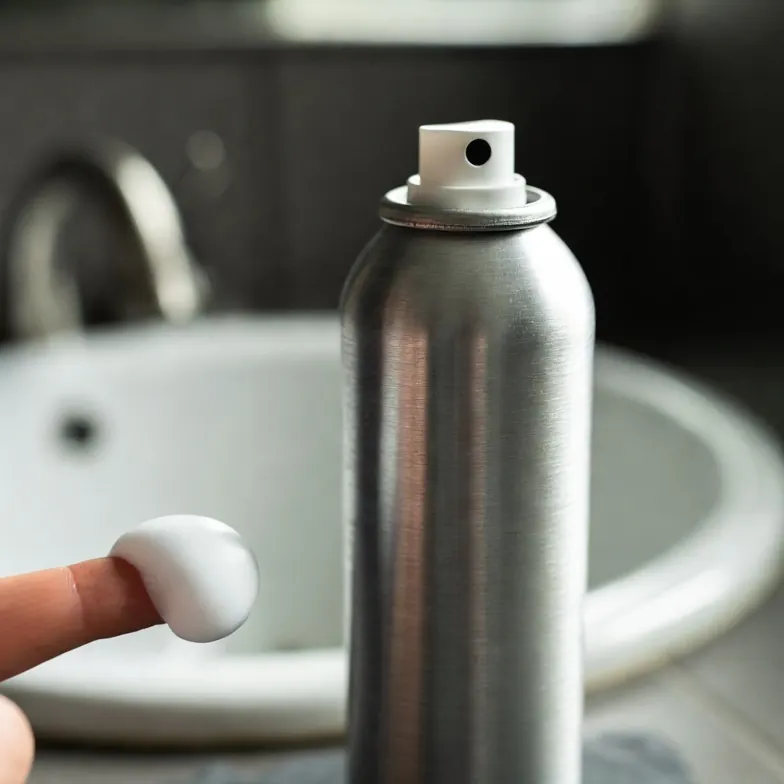
Rogaine Men's 5% Minoxidil Foam
Rogaine's 5% foam is the propylene-glycol-free version that solved most of the scalp-irritation complaints around the original liquid. The foam dissolves on contact, dries within a minute, and won't track onto your pillow.
Pros
- No propylene glycol (much lower irritation rate)
- Dries fast — no greasy hair or pillow stains
- Easier dosing than the dropper
- Backed by 30+ years of clinical data
Cons
- Roughly 2x the cost per dose vs. generics
- Foam can melt on warm fingers
Who it's best for
Men with sensitive scalps, anyone who hated the liquid formula, and users who want the cleanest application experience.
Ingredients, usage & evidence▾
Key ingredients
- Minoxidil 5%: Active growth ingredient
- Cetyl Alcohol: Foam stabilizer
- Stearyl Alcohol: Texture modifier
- Butane / Isobutane / Propane: Foam propellants
How to use
Dispense a half-capful of foam, apply directly to the dry scalp, and massage gently. Use twice daily. Wash hands after application.
Scientific evidence
The 5% foam formulation was approved by the FDA in 2006 after a 16-week trial showing comparable efficacy to the solution with significantly reduced scalp irritation reports.
 2
2Kirkland
Kirkland Signature 5% Minoxidil
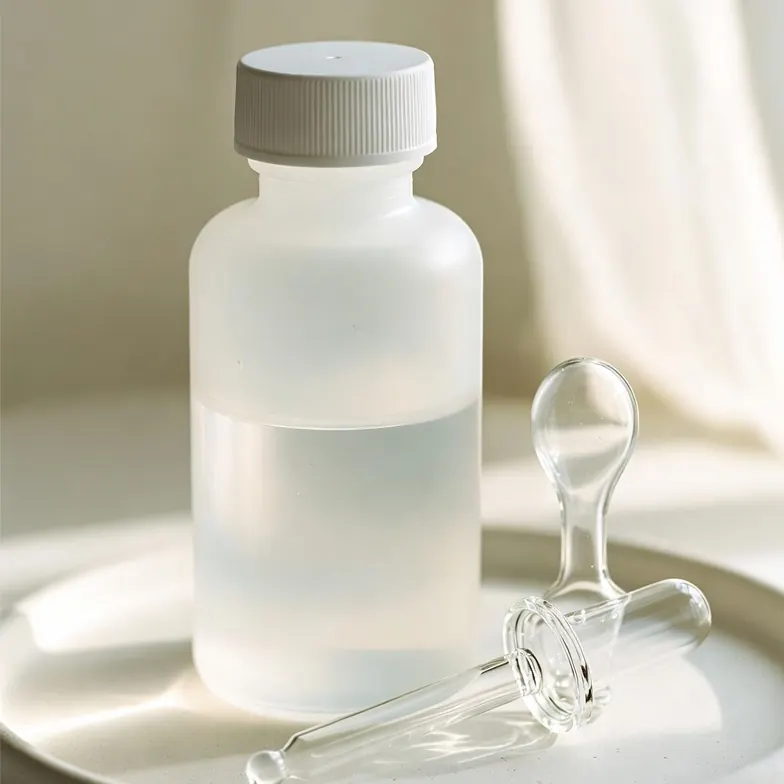
Kirkland's 5% minoxidil solution delivers the same clinically studied active ingredient as Rogaine at roughly a third of the cost. It's the most widely used minoxidil formulation among long-term users on r/tressless and in dermatology communities.
Pros
- Identical 5% minoxidil concentration as brand-name Rogaine
- Six-month supply averages ~$5/month
- FDA-approved active ingredient
- Easy-to-use dropper applicator
Cons
- Liquid formula can drip if over-applied
- Propylene glycol may irritate sensitive scalps
- Requires twice-daily commitment
Who it's best for
First-time minoxidil users on a budget who want a clinically proven option without paying brand premiums.
Ingredients, usage & evidence▾
Key ingredients
- Minoxidil 5%: Vasodilator that extends the anagen (growth) phase
- Propylene Glycol: Carrier that helps the active penetrate the scalp
- Ethanol: Solvent to keep minoxidil in solution
- Purified Water: Base
How to use
Apply 1 mL to the dry scalp twice daily — typically morning and night. Allow at least four hours of contact before washing. Consistency over 4–6 months is required to see measurable results.
Scientific evidence
Topical minoxidil 5% has been studied in randomized controlled trials since the late 1980s and is one of two FDA-approved treatments for androgenetic alopecia. A 48-week study published in the Journal of the American Academy of Dermatology found that 5% solution produced 45% more hair regrowth than 2%.
 3
3Dr. Pen
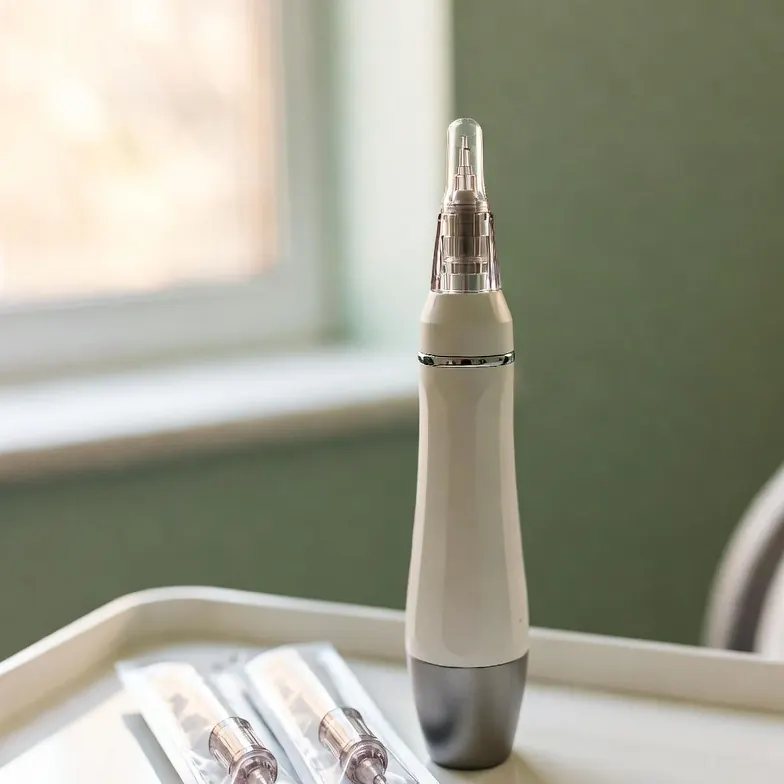
Dr. Pen A6 Ultima Microneedling Device
The Dr. Pen A6 is widely considered the best at-home microneedling device for the scalp. Adjustable depth (0.25–2.5 mm) and a vertical needling motion produce more consistent micro-channels than a manual roller.
Pros
- Adjustable needle depth in 0.25 mm increments
- Vertical needling causes less tearing than a roller
- Cordless and rechargeable
- Replaceable single-use cartridges
Cons
- Higher upfront cost than a roller
- Cartridge replacements add ongoing cost
Who it's best for
Anyone serious about microneedling who wants depth control and clean penetration.
Ingredients, usage & evidence▾
Key ingredients
- Stainless steel needles: Create controlled micro-injuries that trigger a wound-healing response
How to use
Once per week on a clean, dry scalp at 1.0–1.5 mm depth. Pass over each thinning area in two directions. Apply minoxidil at least 12 hours after needling, not immediately.
Scientific evidence
A 2013 study in the International Journal of Trichology found that men using a derma roller alongside topical minoxidil grew significantly more hair than those using minoxidil alone. Most subsequent studies have replicated this effect.
 4
4Nizoral
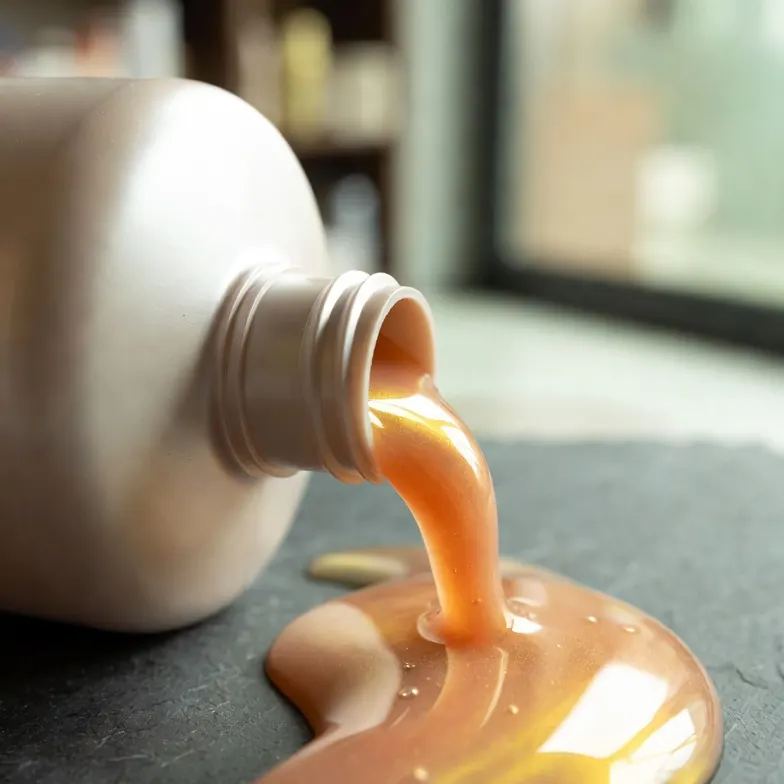
Nizoral A-D Anti-Dandruff Shampoo (1% Ketoconazole)
Nizoral is the only over-the-counter shampoo with multiple peer-reviewed studies suggesting it may help with androgenetic alopecia. The mechanism appears to be a mild anti-androgen effect at the follicle plus inflammation control.
Pros
- Strong scientific evidence base
- Inexpensive — one bottle lasts months
- Also treats dandruff and seborrheic dermatitis
- Available without a prescription
Cons
- Can dry hair if used daily
- Distinctive medicinal scent
- Best used as a 2–3x weekly treatment, not a daily shampoo
Who it's best for
Anyone with an inflamed scalp, dandruff, or who wants to layer a science-backed shampoo into an existing regimen.
Ingredients, usage & evidence▾
Key ingredients
- Ketoconazole 1%: Antifungal with mild anti-androgen and anti-inflammatory activity
- Sodium Cocoyl Isethionate: Cleansing surfactant
How to use
Lather, leave on the scalp for 3–5 minutes, then rinse. Use 2–3 times per week. Follow with a moisturizing conditioner if hair feels dry.
Scientific evidence
A 1998 study in Dermatology compared 2% ketoconazole shampoo to 2% minoxidil and found comparable improvements in hair density and the anagen-to-telogen ratio. Subsequent studies have supported a modest direct effect on AGA in addition to scalp health benefits.
 5
5Capillus
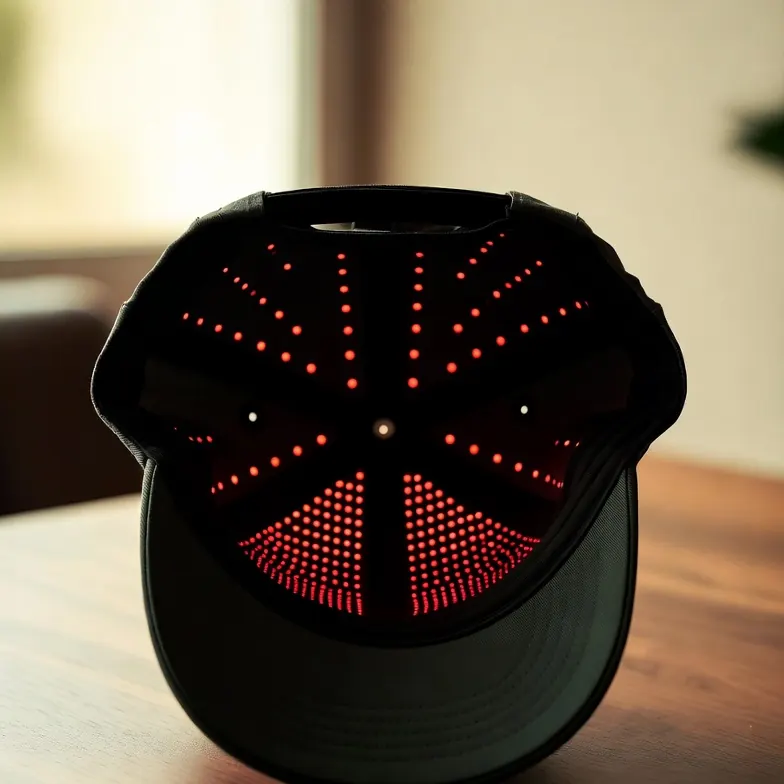
Capillus Pro 272 Laser Cap
The Capillus Pro 272 is what dermatologists tend to recommend when patients want the most powerful at-home LLLT device available. The 272 medical-grade diodes deliver dense, uniform coverage in a 6-minute daily protocol.
Pros
- Highest diode count in its class (272)
- Just 6 minutes per session, daily
- FDA-cleared
- Looks like a standard ball cap — wear it anywhere
Cons
- Significant price tag
- Battery life shortens after a few years
Who it's best for
Men who want the most powerful at-home LLLT device and view it as a long-term investment.
Ingredients, usage & evidence▾
Key ingredients
- 650nm laser diodes: Photobiomodulation of follicle mitochondria
How to use
Wear 6 minutes daily under a normal cap or directly on the head. Best paired with topical minoxidil for additive effects.
Scientific evidence
LLLT at 650nm has Level I evidence from multiple RCTs for treating AGA. Higher diode counts increase the irradiance reaching the scalp.
 6
6The Ordinary
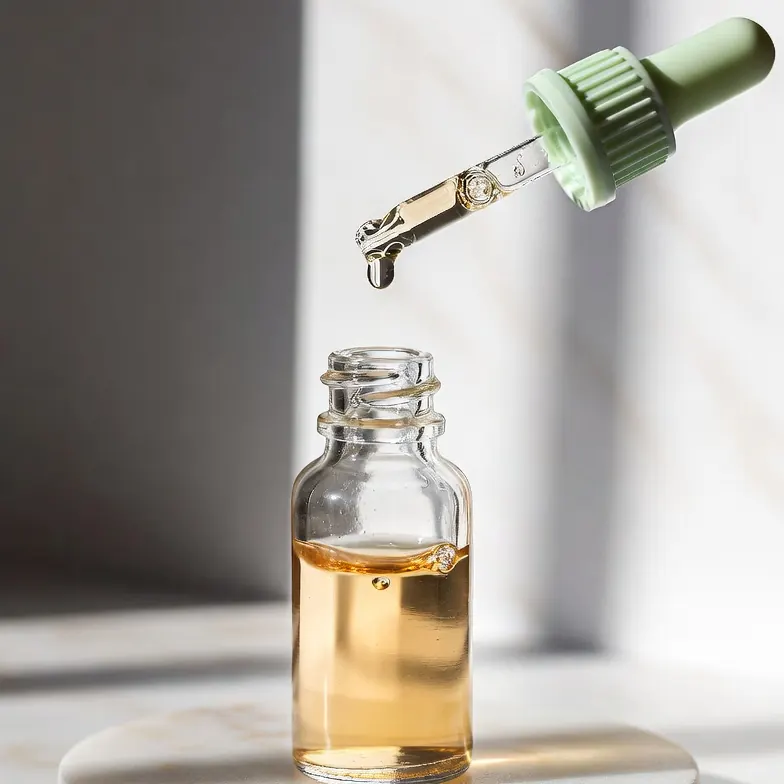
The Ordinary Multi-Peptide Serum for Hair Density
The Ordinary's hair density serum combines four well-studied actives — Redensyl, Capixyl, Procapil, and Baicapil — at a price point that's almost unheard of in the peptide space. It's a low-commitment way to test peptide-based protocols.
Pros
- Stacks four peptide complexes in one bottle
- Drug-free — no side-effect profile
- Vegan and cruelty-free
- Excellent price for the ingredient stack
Cons
- Results require 12+ weeks of consistent use
- Not a replacement for minoxidil or finasteride
- Slightly sticky finish
Who it's best for
Men who can't or won't use minoxidil and want a low-risk peptide regimen.
Ingredients, usage & evidence▾
Key ingredients
- Redensyl: Targets hair follicle stem cells to stimulate the anagen phase
- Capixyl: Biomimetic peptide that may reduce DHT activity at the follicle
- Procapil: Combines biotinyl-GHK, apigenin, and oleanolic acid
- Baicapil: Botanical blend studied for shedding reduction
How to use
Apply a few drops directly to dry or damp scalp daily, massaging in. Leave on. Best used in the evening.
Scientific evidence
Redensyl was studied in a 2014 trial showing a 9% increase in hair density over 84 days vs. placebo. Capixyl has supplier-funded studies suggesting modest density improvements. Independent peer-reviewed evidence is more limited than for minoxidil.
 7
7iRestore
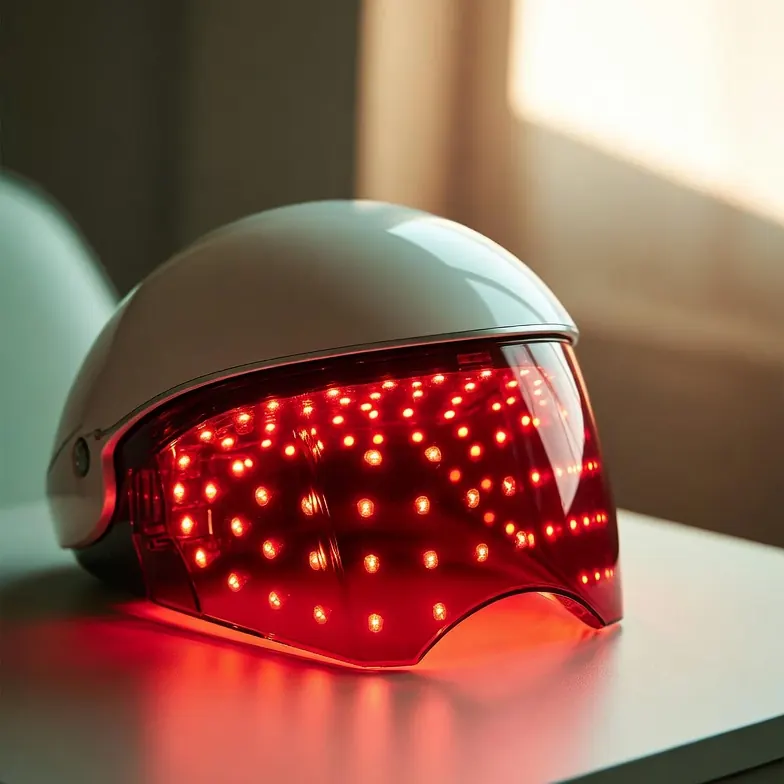
iRestore Essential Laser Hair Growth System
The iRestore Essential is the most affordable FDA-cleared laser device in its category. With 51 medical-grade lasers, it covers the scalp uniformly and runs on a simple 25-minute every-other-day protocol.
Pros
- FDA-cleared for hair growth in men and women
- Hands-free helmet form factor
- 1-year money-back guarantee
- Significantly cheaper than premium competitors
Cons
- Lower laser count than premium devices
- Long-term consistency required
- Bulky to travel with
Who it's best for
Men who want an FDA-cleared LLLT device without spending four figures.
Ingredients, usage & evidence▾
Key ingredients
- 650nm medical-grade lasers: Low-level laser therapy targeting follicle mitochondria
How to use
Wear for 25 minutes every other day on clean, dry hair. Most users see initial response between 16 and 24 weeks.
Scientific evidence
Low-level laser therapy at 650nm is FDA-cleared for androgenetic alopecia based on multiple randomized controlled trials. A 2014 study in Lasers in Surgery and Medicine showed a 35% increase in hair growth in men using LLLT vs. sham.
Quick Comparison Table
At-a-glance: who each product is built for.
| Product | Best For | Price | Rating | |
|---|---|---|---|---|
Rogaine Men's 5% Minoxidil Foam Rogaine Best Overall | Men with sensitive scalps, anyone who hated the liquid formula, and users who want the cleanest application experience. | $52 | 4.7 | Buy |
Kirkland Signature 5% Minoxidil Kirkland Best Budget | First-time minoxidil users on a budget who want a clinically proven option without paying brand premiums. | $28 | 4.5 | Buy |
Dr. Pen A6 Ultima Microneedling Device Dr. Pen Best Overall | Anyone serious about microneedling who wants depth control and clean penetration. | $95 | 4.6 | Buy |
Nizoral A-D Anti-Dandruff Shampoo (1% Ketoconazole) Nizoral Best Science-Backed | Anyone with an inflamed scalp, dandruff, or who wants to layer a science-backed shampoo into an existing regimen. | $15 | 4.6 | Buy |
Capillus Pro 272 Laser Cap Capillus Best Premium | Men who want the most powerful at-home LLLT device and view it as a long-term investment. | $2,799 | 4.7 | Buy |
The Ordinary Multi-Peptide Serum for Hair Density The Ordinary Best Budget | Men who can't or won't use minoxidil and want a low-risk peptide regimen. | $18 | 4.3 | Buy |
iRestore Essential Laser Hair Growth System iRestore Best Budget | Men who want an FDA-cleared LLLT device without spending four figures. | $695 | 4.4 | Buy |
What to look for
Start with FDA-approved options
Topical minoxidil 5% and oral or topical finasteride are the only two FDA-approved hair loss treatments. Both have decades of safety data and the largest effect sizes in head-to-head studies. Anything else should be an adjunct, not a replacement.
Stack mechanisms, not duplicates
The most effective protocols combine treatments that target different mechanisms: a vasodilator (minoxidil), a DHT modulator (finasteride or saw palmetto), a circulation booster (microneedling or LLLT), and an anti-inflammatory shampoo (ketoconazole). Two minoxidil products do not double your results.
Track baseline photos
Take photos under consistent lighting on day one and every 30 days after. Hair density changes are gradual and easy to miss in the mirror. Photos are the only reliable way to know if your protocol is working.
Six months minimum before judging results
Hair follicles operate on long cycles. Most protocols don't show measurable improvement until month four to six. Quitting at week eight because of dread shed is the single most common reason men fail at hair loss treatment.
Frequently Asked Questions
The questions we get asked the most — answered straight.
Keep reading
All articles →Treatments
Strut Health Review: Compounded Hair Loss Formulas, Priced Out
Strut is the compounding-pharmacy tier: 5-in-1 topical finasteride, oral dutasteride from $39/mo, and $18/mo oral minoxidil. What it actually offers, what it costs, and who it fits.
Hair Loss Basics
Ozempic Hair Loss: Why GLP-1 Weight Loss Triggers Shedding
Hair loss showed up in the Wegovy and Zepbound trials at 3–6% — but the drug isn't attacking your follicles. What's actually happening, the recovery timeline, and what to do about it.
Comparisons
Hims vs Happy Head: Standard vs Custom Hair Loss Treatment
Two tiers, not two rivals: Hims sells cheap standardized generics; Happy Head sells compounded dutasteride and 8% minoxidil at 2–3x the price. Which tier you actually need.