Microneedling is one of the most underrated interventions in hair loss treatment. A 2013 study in the International Journal of Trichology found that men using a derma roller alongside minoxidil grew nearly four times more hair than men using minoxidil alone — and subsequent studies have largely replicated the effect. The question isn't whether microneedling works; it's whether you use the right device at the right depth. This guide compares the two devices worth buying in 2026.
Affiliate disclosure: Some links on this page are affiliate links. We may earn a commission if you purchase through them at no extra cost to you. Our editorial picks are independent. Read our policy.
 1
1Dr. Pen
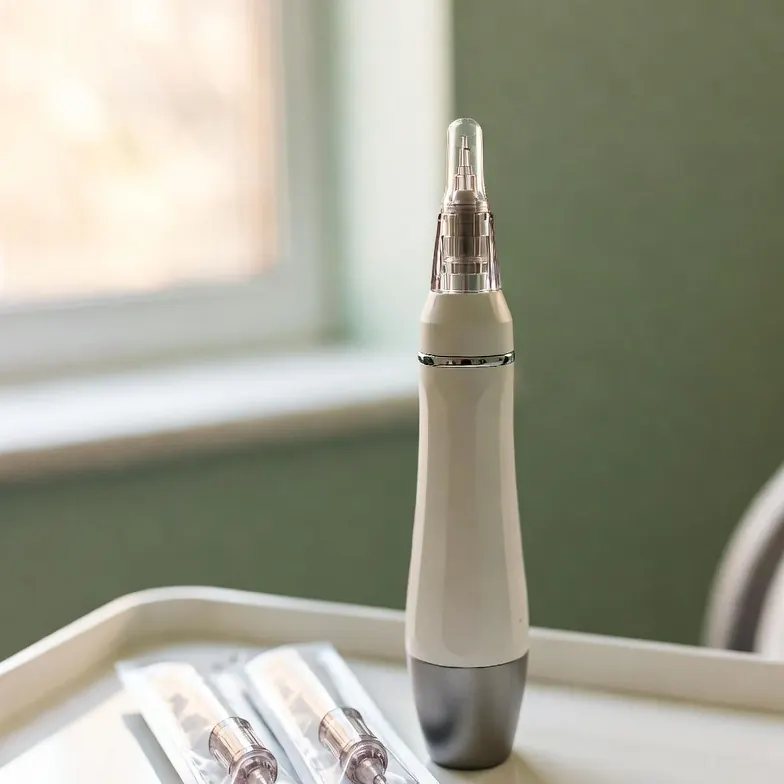
Dr. Pen A6 Ultima Microneedling Device
The Dr. Pen A6 is widely considered the best at-home microneedling device for the scalp. Adjustable depth (0.25–2.5 mm) and a vertical needling motion produce more consistent micro-channels than a manual roller.
Pros
- Adjustable needle depth in 0.25 mm increments
- Vertical needling causes less tearing than a roller
- Cordless and rechargeable
- Replaceable single-use cartridges
Cons
- Higher upfront cost than a roller
- Cartridge replacements add ongoing cost
Who it's best for
Anyone serious about microneedling who wants depth control and clean penetration.
Ingredients, usage & evidence▾
Key ingredients
- Stainless steel needles: Create controlled micro-injuries that trigger a wound-healing response
How to use
Once per week on a clean, dry scalp at 1.0–1.5 mm depth. Pass over each thinning area in two directions. Apply minoxidil at least 12 hours after needling, not immediately.
Scientific evidence
A 2013 study in the International Journal of Trichology found that men using a derma roller alongside topical minoxidil grew significantly more hair than those using minoxidil alone. Most subsequent studies have replicated this effect.
 2
2Linduray
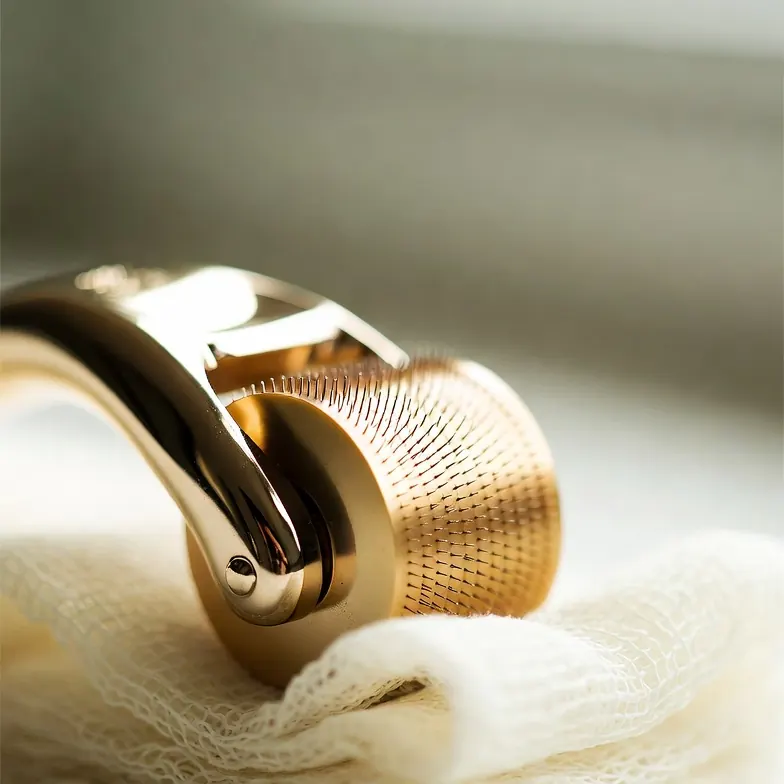
Linduray 540-Needle Titanium Derma Roller (0.25 mm)
A no-frills 540-needle titanium roller at a price that makes entry to microneedling effortless. The 0.25 mm depth is conservative — safe for beginners but limited in efficacy.
Pros
- Cheap entry point to microneedling
- 540 needles for even coverage
- Easy to disinfect
Cons
- 0.25 mm depth is below most clinical study depths (1.0–1.5 mm)
- Manual rollers tear skin more than vertical pens
- Needles dull within 6–8 uses
Who it's best for
Beginners who want to test the routine before investing in a motorized pen.
Ingredients, usage & evidence▾
Key ingredients
- Titanium needles: Hypoallergenic micro-needling surface
How to use
Roll across the scalp 5–6 times in each direction (vertical, horizontal, diagonal) once a week. Disinfect before and after with 70% isopropyl alcohol. Replace every 6–8 sessions.
Scientific evidence
Microneedling efficacy in the published literature has primarily been demonstrated at 1.0–1.5 mm depth. Shallow rollers may offer some benefit via scalp circulation but the evidence is weaker.
Quick Comparison Table
At-a-glance: who each product is built for.
| Product | Best For | Price | Rating | |
|---|---|---|---|---|
Dr. Pen A6 Ultima Microneedling Device Dr. Pen Best Overall | Anyone serious about microneedling who wants depth control and clean penetration. | $95 | 4.6 | Buy |
Linduray 540-Needle Titanium Derma Roller (0.25 mm) Linduray Best Budget | Beginners who want to test the routine before investing in a motorized pen. | $14 | 4.3 | Buy |
What to look for
Depth is everything
Most peer-reviewed microneedling studies use depths between 1.0 mm and 1.5 mm. Shallow rollers (0.25 mm) are safe and easy to use but produce smaller effect sizes. Deeper devices (1.5 mm+) are more effective but require proper disinfection and technique. Start at 0.5 mm if you're new, work up to 1.0–1.5 mm over a few weeks.
Pen vs. roller
Manual rollers tear the skin slightly as they drag across the scalp, which can stretch and tear hair shafts. Motorized pens like the Dr. Pen A6 deliver vertical insertions — cleaner micro-channels, less collateral damage. If you're committing to microneedling long-term, a pen is worth the upgrade.
Once a week, not more
The scalp needs about a week to fully heal between deeper sessions. More frequent sessions can cause chronic inflammation that may actually worsen hair loss. Once weekly at 1.0–1.5 mm depth is the protocol most studies have used.
Don't apply minoxidil immediately after
Applying topical minoxidil right after microneedling allows much more of the active to reach the bloodstream — potentially increasing side effects. Wait at least 12–24 hours after needling before applying minoxidil. This is one of the most commonly ignored safety points.
Disinfect properly
Soak the device in 70% isopropyl alcohol for 10 minutes before and after each use. Replace manual rollers every 6–8 sessions — the needles dull quickly and a dull needle tears tissue rather than puncturing it.
Frequently Asked Questions
The questions we get asked the most — answered straight.
Keep reading
All articles →Treatments
Strut Health Review: Compounded Hair Loss Formulas, Priced Out
Strut is the compounding-pharmacy tier: 5-in-1 topical finasteride, oral dutasteride from $39/mo, and $18/mo oral minoxidil. What it actually offers, what it costs, and who it fits.
Hair Loss Basics
Ozempic Hair Loss: Why GLP-1 Weight Loss Triggers Shedding
Hair loss showed up in the Wegovy and Zepbound trials at 3–6% — but the drug isn't attacking your follicles. What's actually happening, the recovery timeline, and what to do about it.
Comparisons
Hims vs Happy Head: Standard vs Custom Hair Loss Treatment
Two tiers, not two rivals: Hims sells cheap standardized generics; Happy Head sells compounded dutasteride and 8% minoxidil at 2–3x the price. Which tier you actually need.